Kenneth’s Coda: The Final Performance

This is part 3 of a 3-part series. To read part 1, click here. For part 2, click here.

Over the course of the next week things happened very quickly, and what started out as a simple mystery soon blossomed into a full-blown research project approaching near-obsession levels. Every new piece of discovered information opened up more research avenues, more questions.

It soon turned out that finding Kenneth was the easy part. But as I delved deeper I found myself moving from where Kenneth was to who he was. And it became increasingly evident that there was a bigger mystery to solve.

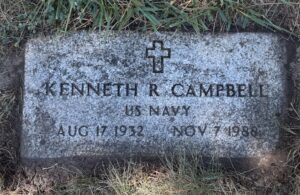
I’ll explain, but let’s start with the obvious: After 38 years, I finally found Kenneth. And more than that, I’ve visited his grave twice.
Further research through Newspapers.com yielded more than I could have hoped for: Brahms Conservatory was listed from at least 1963 as hosting film viewings, musical instruction, and recitals. In 1979, the last mention I could find, there was a small article about Kenneth closing its doors. Yet, there were still many advertisements for Kenneth privately teaching music through the 1980s.

Although its doors closed around 1980, he continued to offer occaional instruction and recitals at the Detroit Institue of Musical Art and at Smiley Brothers, under the Brahms Conservatory name.

Other online resources, such at the Royal Oak Historical Society and FindAGrave.com yielded further results. Through FindAGrave.com, I found his mother’s grave at Holy Sepulchre Catholic Cemetery in Southfield, only a few miles from where I live. But via the Royal Oak Historical Society, I found a news article indicating that he had published a book.

At this point, I had reached the end of my online searching. After a week of browsing through archived newspaper articles, year books, and census records, it had become time to start reaching out further.

I filed with the State of Michigan for a copy of his death certificate. I filed with the US Military Archives for a copy of his Navy discharge. And I contacted Holy Sepulchre for the plot location of his mother.

First, I received his death certificate. He did die from a heart attack brought on by complications from atherosclerosis. He also had diabetes. His funeral arrangements were handled by Hopcroft Funeral Home and he was interred at Holy Sepulchre. Also a pleasant surprise: he apparenly had a younger brother, Donald, who signed off on the death certificate.

I then reached out to Hopcroft, and they provided me with further information that led me to where his funeral was held and also helped me find his obituary. Holy Sepulchre responded back with information as to where his mother was located – and it also listed his father next to her. I decided to visit.

At the office of Holy Sepulchre, I asked if Kenneth was also buried there, and they were able to provide me with the plot location for him. I was an emotional wreck at this point, but decided to pay him a visit and put this part of the mystery to rest.

Less than two weeks after starting this journey, I was standing at Kenneth’s grave. I cleaned it off. I cried. I was relieved, I was sad, I was curious… so many emotions, it’s still hard to process these weeks later. But the important part was this: I now had answers and a working theory on what happened.

In my first post, I outlined how Kenneth’s personality shifted from being a patient teacher to one who would get fairly nasty. I think that his health started to rapidly decline in 1988. The diabetes, along with the atherosclerosis, likely made it difficult for him to manouver life. He was feeling worse and worse, until something happened and he ended up in the hospital in September 1988. Whether he was discharged for a time or not, I don’t know. But I do know that he died from a heart attack a little over a month later. His sister, Shirley, did contact us regarding this – or at least it is a strong assumption, otherwise I would not have had a memory which ended up matching the facts.

Finally, as a last piece of the puzzle, the Navy discharge papers arrived last week. His signature on the discharge matched his signature on my copy of Polka Vivace. There was no possible doubt remaining.

So, to summarize everything I’ve learned, here is a small bio:

Kenneth was born on 17 August, 1932. He lived in Ferndale, attending Hazel Park high school, graduating in 1950. During that time he also received instruction at the Detroit Institute of Musical Art. In 1952, he enlisted in the Navy during the Korean war. In 1956 he was discharged, but signed up for the Navy reserves for another four years, receiving his final discharge in 1960.

In 1961 he founded the Brahms Conservatory and, at some point thereafter, started the Brahms Music Publishing Company. During the 1960s and 1970s he held regular events at the conservatory in Royal Oak. However, he closed the conservatory around 1980 and continued hosting events elsewhere. Also during this time he provided private lessons for a variety of instruments.

At some point, he moved to what would be his final residence in Hazel Park. On 7 November, 1988, he died from a heart attack and was interred at Holy Sepulchre Catholic Cemetery.

Today is his birthday. I cleaned off the headstones of his parents. Everything has been submitted to FindAGrave.com. I even put a small US flag on his grave as he was a veteran. We had a good talk, and I told him I would see him Memorial Day. I intend to keep their graves in order for as long as I am able. They deserve that much.

Happy birthday, Mr. Campbell. You would have been 94 today, a very significant number for both of us, for reasons I will not here get into. I’m glad I finally found you.

But wait! you say. What about the book he wrote?

That is a story for another time. There are many things I discovered about who Kenneth was, and many questions I still want answered. What was he like? Who were his friends? Did he publish any other books or pieces of music? Some questions I have answers to, others require more research. A lot more research. So stay tuned. I expect this to be an interesting journey which will take a few months to complete. I have people to reach out to, archives to visit, and more paperwork requests to file.

It would seem that Kenneth had made a name for himself around here in different ways, so why was it so difficult to find out anything personal about him? That’s what I intend to find out!


My personal thanks to these individuals who helped me along the path:

Lisa Brown, Oakland County Clerk

Jodie Figurski, Holy Sepulchre Cemetery

Sue Guarnieri, Hopcroft Funeral Home

And my gratitude to these wonderful tools and all the people who have worked hard to provide detailed information:

Ancestry.com

Newspapers.com

FindAGrave.com


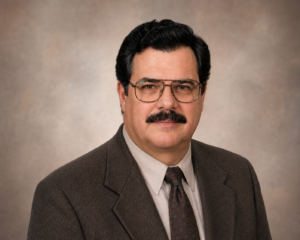
One last thing before I close this chapter and begin opening the next one. I had ChatGPT compile all the photos I had of Kenneth and create an age-progressed image. It isn’t perfect and, to be honest, I don’t quite remember what he looked like all those years ago. But this is a close approximation – or at least my fragmented memories and gut tells me so. One of my short-term goals while working on the next leg of research, is to find a more recent photo of him. I am curious to see how close ChatGPT got.

Kenneth’s Coda: The Orchestra Assembles

This is part 2 of a 3-part series. To read part 1, click here.

For the last 38 years, as the information and tools available on the internet gradually became robust, I would occasionally revisit my search for Mr. Campbell. But, as time went on, I gradually lost all but a small handful of memories. And sadly, I somehow lost my lesson book, which I had been holding onto in the hopes that it would help me solve this mystery one day. Gone are all the cartoons and other unique bits of Mr. Campbell’s personality, as well as other clues that may have been useful. I grieve that loss.

316½ S. Main St.

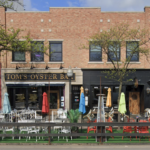
Until a few months ago, the only tangable reminder of Mr. Campbell having been in my life was a piece of sheet music: Polka Vivace (click here to view a PDF scan). The music is copyrighted 1966 and was published by Brahms Music Publishing Company at 316½ S Main St, Royal Oak. That property today sits above Tom’s Oyster Bar.

In 1985 he had invited me to a recital performance held at Smiley Brothers in Detroit and, while they are long since gone, a copy of the program (click here to view a PDF scan) survived nestled away within the many papers my grandmother left behind when she died a few years ago. And it was this program, found only a few months ago, that ended up providing a huge clue.

The recital was presented by Mr. Campbell who, according to a blurb on the back, founded the Brahms Conservatory in 1961.

Was Brahms Conservatory related to Brahms Music Publishing Company? Were they somehow connected? As it would turn out, they were both companies started by Mr. Campbell, and they both shared the same address in Royal Oak. But I’m again getting ahead of myself.

In the past, searches for Polka Vivace, Brahms Music Publishing, obituaries, or anything else relating to Mr. Campbell returned no results. But now the potential research avenues were opening up quickly, and I was starting to change my approach at how to search.

Now tools like ChatGPT are available, with stores of information gathered from the internet. I wondered whether it could help find him or at least connect pieces of information or suggest research avenues I hadn’t considered. So I asked.

Nothing. Not a damned thing.

However, I had an assortment of memories and facts that I could certainly use a GPT to compile and analyze, so I did just that.

I typed in everything I could remember:

  • he was tall and overweight
  • he was middle-aged
  • he had dark hair and a mustache, possibly glasses
  • he lived within a reasonable distance of my home in Warren
  • he took yearly trips to Rio de Janeiro
  • a vague memory of visiting his house, which may have been on a dead-end street
  • and a vague memory of his sister contacting and telling us he died from a heart attack

And now I had a recital program to add to that. I fed all of this into ChatGPT, and it made some potential connections and suggestions that I hadn’t considered, which has helped me pursue new avenues.

I’d been using Ancestry.com to research and build my own family tree for a few years… could I use it to find Mr. Campbell? It was a long shot, but I decided to give it a try.

And do you know what? I found him within a few hours of searching! Well… I actually found three Kenneth Campbells, all who had at least one sister, all within an acceptable radius of my home in Warren, and all within an acceptable age range.

But there was only one who really stood out: death in 1988 from a heart attack, matching my hazy memories; certainly not concrete proof, but good enough to pick as my first research point. Access to census records showed that this Kenneth Campbell grew up in Ferndale. Other associated records had his final address on Carlisle St. in Hazel Park.

Making the assumption that, if he had founded the Brahms Conservatory in 1961, he would have been at least 18 by that year to legally form a business. This means he would have had to have been born no later than 1943. And assuming that, as a middle aged man (when he taught me), he would have been no older than about 60, that would mean he shouldn’t have been born before 1928. Associated records at Ancestry.com indicated that this Kenneth was born in 1932. There were also scans of the 1950 Hazel Park High School yearbook – where he likely would have attended when he would have been a senior.

Opening those scans, I found his photo. He looked familiar but I wasn’t sure. So I copied all the pictures I could find of him and sent them to the only other person I know who knew him: my mother.

She replied nearly immediately, “That’s him“.

This Kenneth Campbell was very likely my Kenneth Campbell!

Elated, but cautious, I continued my search for more evidence. Memory is fickle, and I was asking my mother to remember someone from almost 40 years ago, based on a high school picture taken almost 40 years before that.

The house on Carlisle

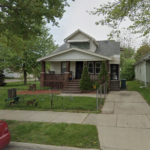
The records on Ancestry.com indicated that Kenneth Campbell’s last address was on Carlisle St. in Hazel Park. I looked it up using Google Maps street view and I was in shock! Memories of the house I remembered visiting started to come back, especially since this house had a novel feature that I didn’t understand at the time (and had actually forgotten): a second front door leading up to a second floor flat. And while the house isn’t on a dead end street, it is right around the corner from a street which ends at a park (though not a dead end). Still not concrete proof, but definitely another potential puzzle piece falling into place.

By this point, I was nearly certain I had found him. But little did I know where my journey was about to take me in so short an amount of time. I was, in reality, still only on Day One of my research and had already made much progress.

It turned out that there was so much more to discover. Stay tuned!

Listen to a bad-quality, digitally rendered version of Polka Vivace:


Note: This post was written with a small amount of ChatGPT to help proofread, tighten up the language, and keep me on track with the research I’ve been using it to help compile and connect data points. Additionally, many of the photos have been cleaned up and slightly enhanced with the use of AI assistance.

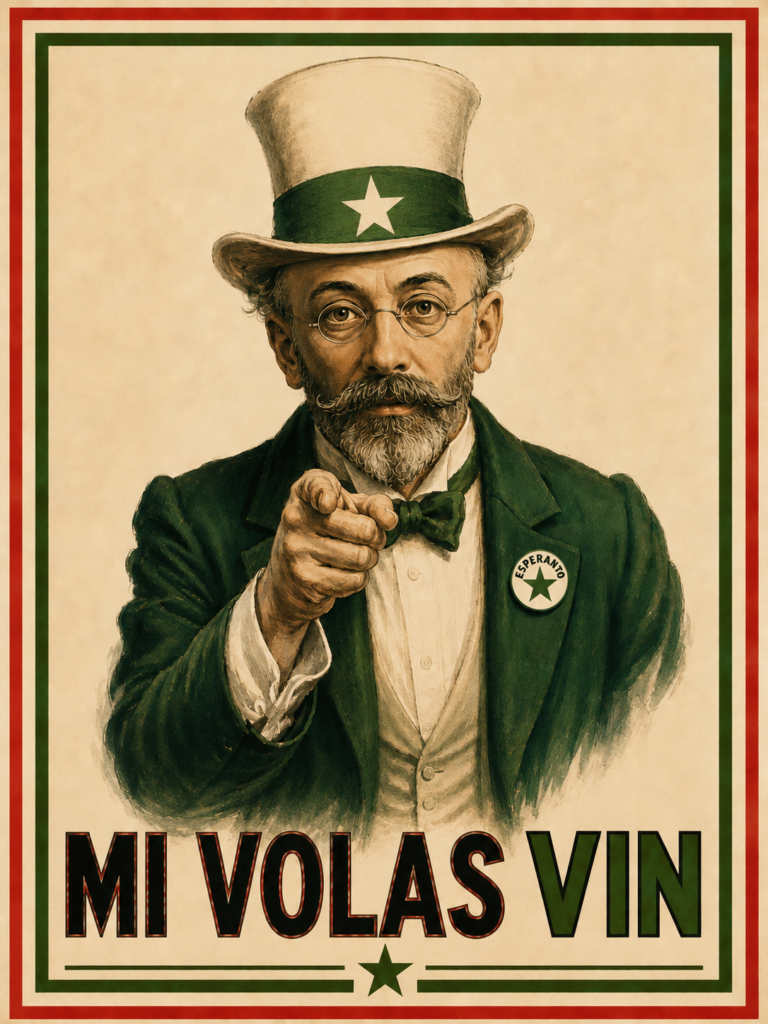
Onklo Ludovigo Volas VIN!

Don’t know what got into me. Probably using GPT too much lately for research. But I thought this was a cute idea, planning on maybe making a t-shirt. I got GPT to create this inspirational poster based on the WWII Uncle Sam poster to start finding a way to bring about awareness about Esperanto. Steal it, if you like!

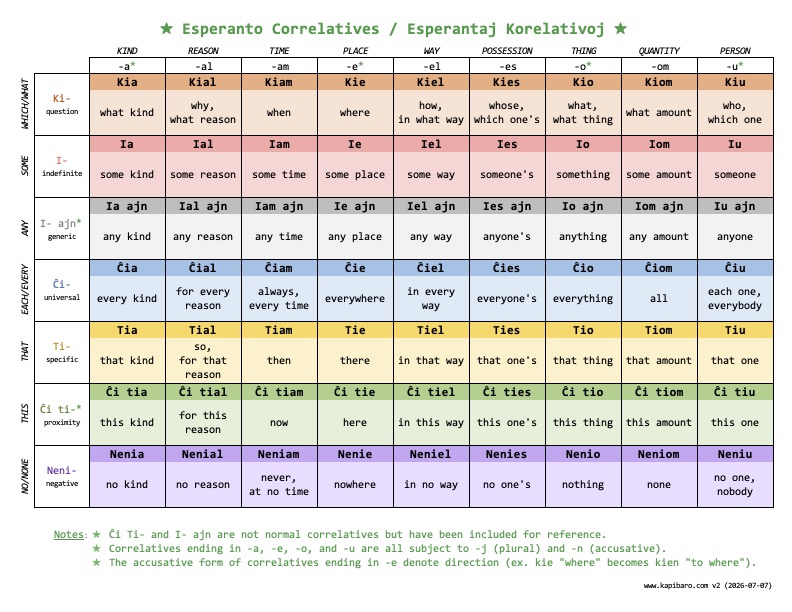
Esperanto Correlatives / Esperantaj Korelativoj

One of my two biggest problems learning Esperanto is the Correlatives. They are set up very logically, but for some reason I can never seem to grasp them completely. There exist many versions of the correlative “cheat sheet”, but I’ve yet to see one with three things that I’ve added onto mine.

First, in order to help learn better, I place the prefix “Ki-” at top because it is typically a question. That way, everything that follows becomes an answer. For example, Kiam? (When?) can be answered with iam (some time), iam ajn (any time), ĉiam (always), tiam (then), ĉi tiam (now), neniam (never).

Second, I added “I- ajn” and “Ĉi ti-” as prefixes which, not technically considered correlatives, still fits in and are built out by the other suffixes.

Finally, I added notes about exceptions which help clarify some details. A higher-quality PDF version can be downloaded here: new correlatives

Kenneth’s Coda: The Last Lesson

Kenneth Campbell, 1950

In September 1988, a personal mystery occurred, one that I could not solve for 38 years: What happened to Mr. Campbell?

In the mid-1980’s, when I was about 7, my parents decided it was time for me to learn how to play a musical instrument and, for whatever reason, they picked a dual keyboard organ. Our small living room was soon graced with a small electric model. A teacher was found… and then one day he showed up for the first time at the front door of our Warren home: Kenneth R. Campbell.

Mr. Campbell was a patient and encouraging teacher, often drawing silly comics in my lesson book to help explain concepts. The work was difficult but usually entertaining, and I genuinely liked him. We had a good rapport and I looked forward to my weekly lessons.

While my musical education may have started, my parents’ relationship was unfortunately at its end by 1985 and they divorced. In 1987 my mother remarried and we moved from Warren to Auburn Hills which, at the time, was a fairly rural community. I actually remember watching the Chrysler world headquarters and The Palace slowly being built as they weren’t too far from my home.

Shortly after the move, my grandparents bought a piano for me and so my lessons shifted away from the organ. It wasn’t too different or difficult, though it was a slight learning curve and Mr. Campbell would sometimes become annoyed with me.

The shift in his personality was initially subtle but rapid. Often he would complain about the length of the drive from his home in Hazel Park. But as 1987 became 1988, he became progressively more irritable – often to the point of yelling at me. By mid-1988 it had become common for lessons to end with me in tears. I came to dread those weekly lessons and started to lose interest, which would only serve to frustrate him further.

Then, in mid-September 1988, Mr. Campbell didn’t show up for my weekly lesson. He didn’t show up the following week either. In fact, he never showed up again. Calls to his house went unanswered. I have vague memories that we were eventually told by his sister that he had died from a heart attack. But memories being how they are, especially after so much time, I couldn’t even be sure about that anymore.

And so it is at this point that the mystery truly started. For a kid living 30 miles away from his former piano teacher, it was impossible to even start researching. And by the time I was old enough to start doing any digging, I had forgotten so many important details that, were it not for the internet, I don’t think I would have ever been able to truly find any meaningful answers.

Before we go any further, you may ask: Why was this such a mystery, didn’t he supposedly die from a heart attack? In all honesty, it goes back to my uncertainty of whether he died or just stopped showing up for some reason. It nagged at me. I had no hard evidence either way. I never saw an obituary. I never attended a funeral. As the years went on curiosity would grab me, yet any research I conducted would continue to yield absolutely zero results. No obituary, no record of a funeral, no death records, no address records. Nothing. And that was intriguing enough.

These days we take for granted the plethora of geneological records available through sites like Ancestry, Find a Grave, and digital scans of old newspapers, phonebooks, yearbooks, obituaries and the like. We often take for granted, on some level, AI assistants like ChatGPT which contain a wealth of human knowledge and are increasingly effective at helping to connect dots. Back when Mr. Campbell disappeared from my life, we had no internet, no digital scans. We had libraries and historical archives that required physical access and hours of time piling through card catalogues, books, and microfiche. If your research meant you needed a record from a small chapel on the outskirts of Moscow, then you were shit out of luck if you had no finances to travel or contacts in the area.

Things have changed since then, allowing average Joes like me to do a lot of research from the comfort of their desks: it is amazing what can be found with a few clicks of a mouse button these days! It was time to research again, and I was excited for what I would potentially find using today’s tools.

This post is the beginning of what I expect to be a months- or years-long research project to reconstruct the life of Kenneth R. Campbell. What started out as a simple curiousity quickly became a mystery, and that mystery has blossomed into a puzzle which often makes no sense, naturally adding to the intrigue. Finding any evidence of Mr. Campbell’s existence, considering how many students he appears to have taught throughout the metro Detroit area over so many decades (among other factors soon to be discussed) has proven to be insanely difficult. It is as if the world has forgotten him.

I intend to correct that. Stay tuned.


Note: This post was written with a small amount of ChatGPT to help proofread, tighten up the language, and keep me on track with the research I’ve been using it to help compile and connect data points. Additionally, many of the photos have been cleaned up and slightly enhanced with the use of AI assistance.

Why the star? / Kial la stelo?

La Esperanta flago enhavas stelon, fakte la verda stelo fariĝis simbolo por Esperantistoj trans la mondo. Sed, kial?

Rigardu: la stelo havas kvin pintojn.

  1. La Rusa
  2. La Pola
  3. La Germana
  4. La Jida
  5. La Belarusa

Kvin ĉefaj lingvoj, kiuj estis parolataj en Bjalistoko, kie L.L. Zamenhof loĝis. Do, en la mezzo de tiu stelo, vi ankaŭ trovos nur unu pinton: Esperanto. Tial estas kiel L.L. Zamenhof kreis Esperanton – pontlingvo por lia urbo. Bonege!


The Esperanto flag contains a star, in fact the green star has become a symbol for Esperanto speakers across the world. But why?

Consider: the star has five points.

  1. Russian
  2. Polish
  3. German
  4. Yiddish
  5. Belarusian

Five primary languages that were spoken in Bialystok, where L. L. Zamenof lived. So, in the middle of that star, you will also find only one point: Esperanto. That is why L. L. Zamenhof created Esperanto – a bridge language for his city. Awesome!

Scroll to top